
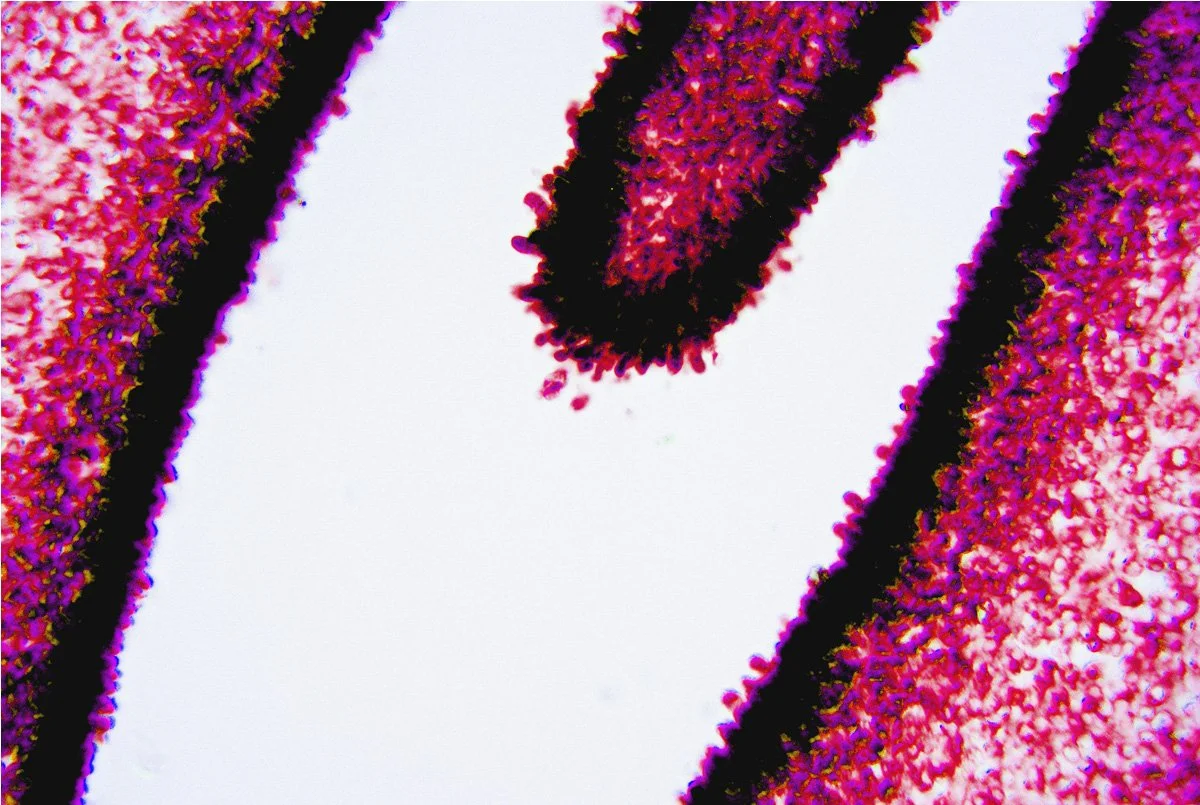
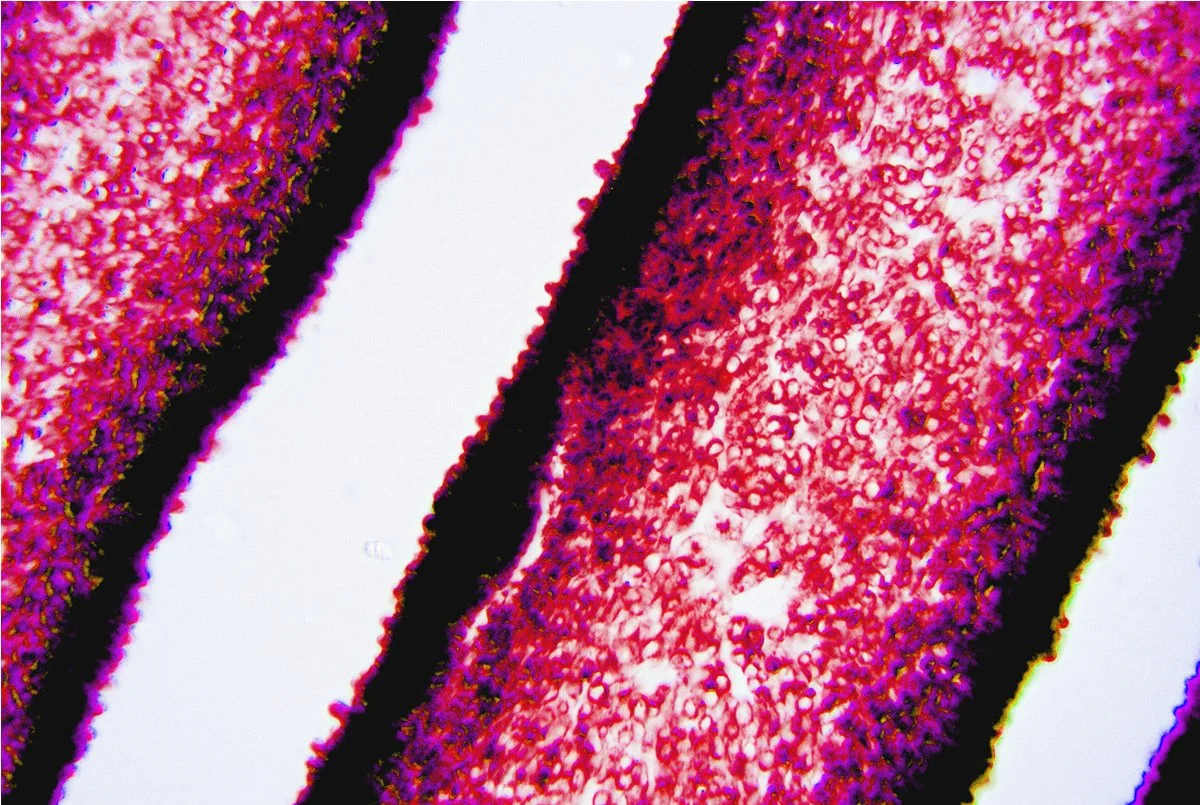
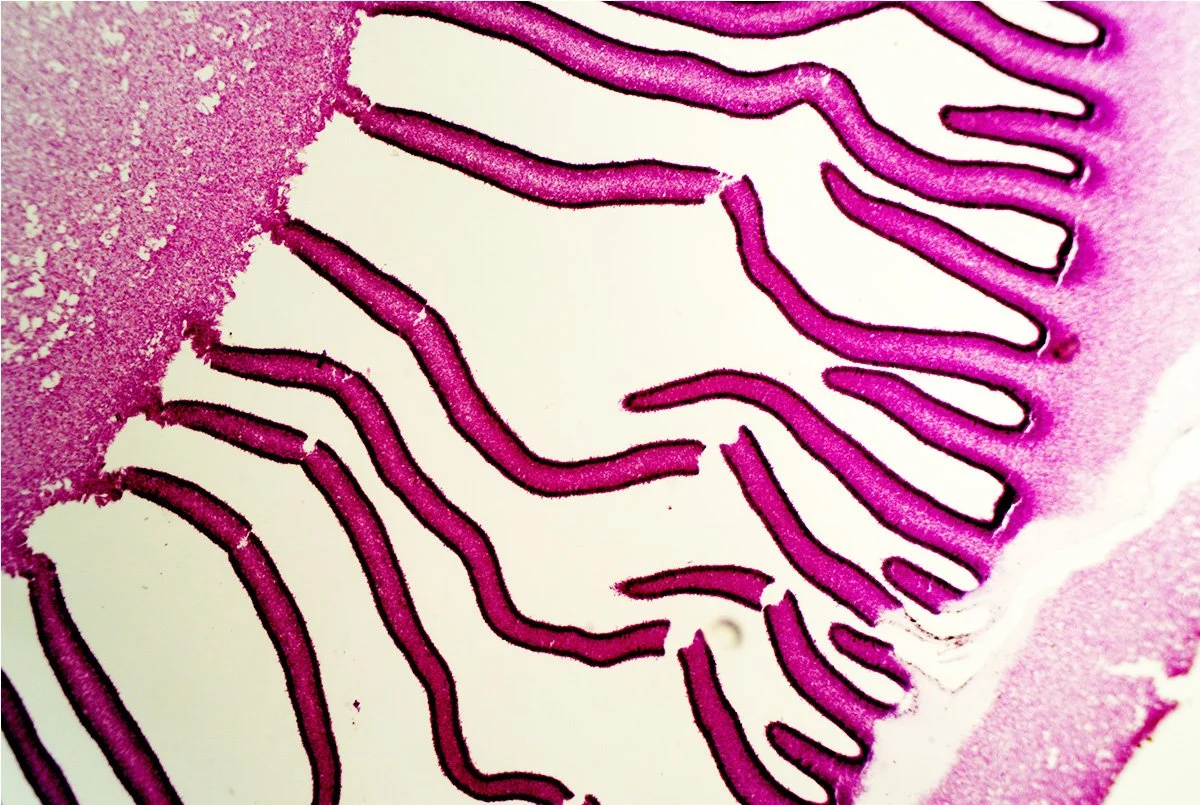
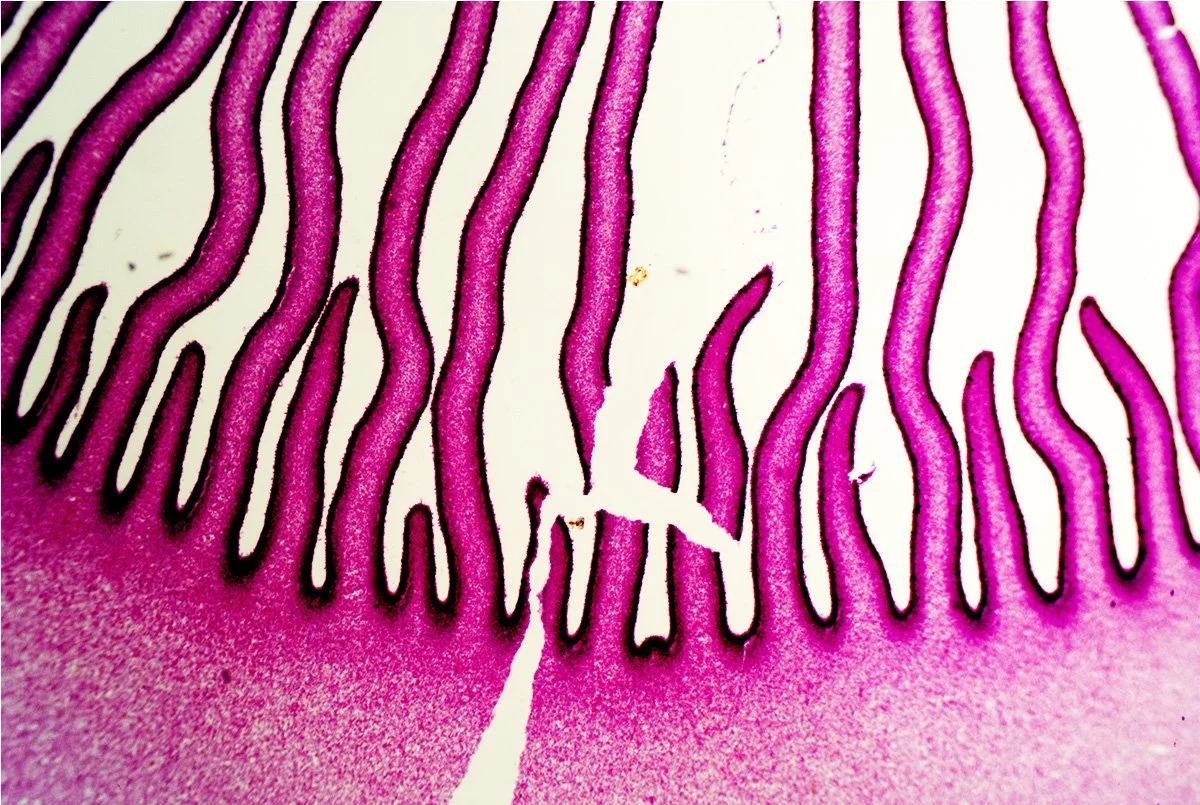
This gallery showcases the epidermal layer of the onion (Allium cepa)—a single-cell-thick tissue that has become a cornerstone of biological study.
Under the microscope, the onion epidermis becomes a beautifully ordered landscape of repeating shapes—transparent cells arranged like tiles in a living mosaic.
Each cell wall forms a crisp border, creating a pattern that is so regular it almost appears architectural.
Yet these geometric chambers are not static structures; they are living units that regulate water balance, protect underlying tissues, and serve as the onion’s first line of defense against the outside world.
Onion Epidermal Layer



The scientific fascination with structures like the ones found in the onion epidermis dates back to the very beginnings of microscopy.
In 1665, English scientist Robert Hooke examined thin slices of cork under a primitive microscope and famously described the tiny compartments he saw as “cells,” borrowing the term from the small rooms occupied by monks in monasteries. Hooke’s observations were the first recorded description of cellular structure, marking the birth of cell biology.
As microscopes improved during the eighteenth and nineteenth centuries, scientists began exploring plant tissues like the onion epidermis to better understand how living organisms were built. The onion proved to be an ideal specimen: its epidermal layer is only one cell thick, easily separated from the bulb, and naturally transparent when viewed under light microscopy.
For generations of students and researchers, this humble vegetable became one of the most accessible windows into the microscopic world.
By the nineteenth century, German botanist Matthias Schleiden and zoologist Theodor Schwann used observations of plant and animal tissues—including plant epidermal layers—to help formulate the cell theory, which proposed that all living organisms are composed of cells. This concept became one of the central principles of biology, shaping how scientists understand life at every scale.
Beyond its role in teaching, the onion epidermis also reflects the remarkable defensive chemistry of plants. As the outermost layer of the bulb, it acts as a protective barrier against microbes and environmental stress.
Onions produce sulfur-containing compounds and antimicrobial enzymes that help deter bacterial and fungal invaders—part of a sophisticated biochemical defense system that plants deploy without ever moving from the soil.
Today, the onion epidermis continues to serve scientists and students alike. It remains one of the clearest examples of cellular organization under the microscope and a reminder that profound discoveries often begin with the simplest observations.
Seen through magnification, this familiar kitchen ingredient becomes something entirely different—a living grid of cells that tells the story of how scientists first learned to see life at its smallest scale.
From the earliest microscopes to modern biological research, the onion epidermis remains a quiet but powerful symbol of curiosity, discovery, and the enduring beauty of the microscopic world.